From Rejection to Graduate Entry: How My Detour Strengthened My Medical Application
Facing rejection from medicine isn’t the end. One student shares how studying Biomedicine provided clinical exposure, research experience, and personal growth, helping her reapply with confidence and a stronger, more mature application.
Author: Sana Gharaee - 2nd Year Medicine - Keele University
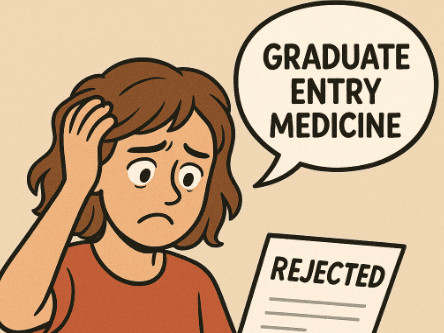
When I was rejected from medicine at 18, straight after A-levels, it felt like the end of the road. My only option was my fifth choice — Biomedical Sciences (as so many of us do). At the time, I saw it as failure dressed up as a degree. What I didn’t realise then was that this so-called detour would become one of the most important stepping stones in my journey to medicine.
That became clear when I reapplied. Having already completed a degree gave me a stronger sense of direction and a more strategic approach. With admissions tests, for example, I knew some universities required UCAT while others asked for GAMSAT. Instead of panicking, I compared requirements and chose what suited me best. Since I already had experience with UCAT, I sat it again, focusing my energy on familiar ground rather than spreading myself too thin (definitely one of my better life decisions).
This more measured approach also carried into interviews. At 18, I struggled to find enough to talk about — being in lockdown during Covid didn’t help, and I didn’t even have a part-time job to lean on. Three years later, I had far more to draw on: my dissertation, literature reviews I presented as part of my degree, internships, and voluntary roles. These gave me the ability to provide richer, more detailed answers and demonstrate genuine growth, rather than relying on hypothetical scenarios (which interviewers can usually spot a mile away). Instead of reciting rehearsed responses, I could engage in conversations, which made all the difference.
Biomedicine also shaped how I thought about research, something often overlooked at the student level but increasingly important in medicine. Because the course was heavily research-focused, I entered medicine already looking for opportunities to contribute to projects, assist with ongoing studies, or work towards publications. That background meant I could speak confidently about research during my application, and I believe it gave me an advantage over applicants who hadn’t yet had that exposure. Beyond the application itself, it also developed the critical thinking skills medicine demands and gave me a clearer sense of direction for the future.
Perhaps most importantly, this broader experience gave weight to my motivation. And while I can’t say for certain, I felt interviewers believed me more when I said medicine was the career I wanted for life. Having studied another subject first, I could explain why Biomedicine wasn’t fulfilling enough and why medicine was. That contrast made my decision feel more grounded and mature — not just a choice made at 17, but one reinforced by experience.
The same applied to work experience. During A-levels, gaining clinical exposure was extremely difficult, especially with the impact of Covid. As a university student, however, I had more independence and more opportunities to build experiences that mattered (and fewer awkward phone calls begging GPs for shadowing). These became valuable talking points in both my personal statement and interviews, helping me show commitment and maturity.
And finally, what tied all of this together was confidence. Having already navigated a degree, I wasn’t intimidated by university life anymore. I knew how to manage deadlines, communicate with lecturers, and take responsibility for my own learning (well… most of the time). I was also more comfortable reaching out for support, whether that meant emailing professors with questions or using student services (something first-years often forget even exists). That confidence translated directly into how I came across during the application process — calmer, more assured, and clearer about why medicine was the right path for me.
If I could go back, I would still take the same route. Rejection at 18 didn’t mean I wasn’t capable; it simply meant my journey was going to look a little different. That difference became my strength. For anyone reapplying or considering the graduate route, remember this: the time you spend outside of medicine can add depth to your application and make you stand out when it matters most (sometimes, the detour really is the shortcut).