
Medicine vs Dentistry: How to Choose the Right Healthcare Career
Medicine and dentistry are both rewarding careers, but they differ in study, skills, work-life balance, and patient care. This guide breaks down the key differences to help you make an informed choice.
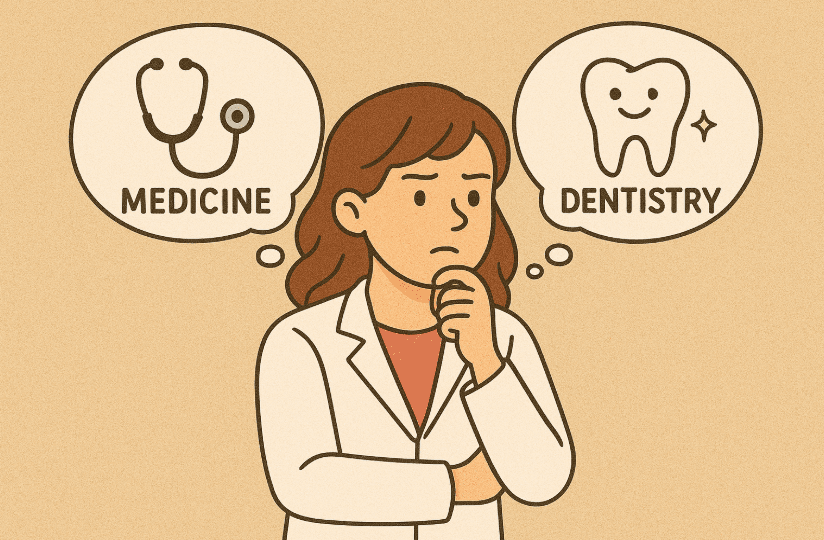
Hey future healthcare heroes! 👋
If you’re reading this, you’re probably trying to figure out whether medicine or dentistry is your perfect fit. Both are amazing careers, but they’re also very different in terms of study, lifestyle, work environment, daily tasks, and long-term career progression.
Don’t worry, we’re going to break it all down in detail so you can make an informed choice. Whether you’re shadowing professionals, doing work experience, or just starting your research, this guide has everything you need.
🎓 Education Path
Medicine:
Typically a 5–6 year undergraduate degree in the UK. Graduate entry courses are usually 4 years.
Early years focus on basic sciences: anatomy, physiology, biochemistry, pharmacology, and pathology.
Clinical years involve hospital rotations, GP placements, and community care, giving exposure to a variety of specialties.
After graduation, doctors enter foundation training (2 years), followed by specialty training, which can take 3–10 years depending on your chosen field.
Dentistry:
Usually a 5-year undergraduate degree in the UK.
Early years cover general sciences but with more emphasis on oral anatomy, dental materials, microbiology, and clinical skills.
Later years focus on hands-on dental procedures: fillings, extractions, crowns, bridges, orthodontics, and preventive care.
After graduation, dentists typically complete foundation training in practice, before working independently or specializing.
Key difference: Medicine involves broad knowledge across the whole body, while dentistry is highly specialized in oral health.
Tip: If you enjoy learning a wide range of medical topics, medicine may suit you. If you enjoy precision, procedures, and focusing deeply on one area, dentistry could be better.
🏥 Clinical Experience
Medicine:
Doctors rotate across multiple specialties: surgery, pediatrics, psychiatry, obstetrics, emergency medicine, geriatrics, and more.
You interact with a diverse range of patients, from children to the elderly, and manage complex systemic illnesses.
Work often happens in teams of doctors, nurses, and allied health professionals.
Dentistry:
Dentists mainly work in clinics, hospitals, or community dental centers.
Patient care is mostly one-on-one, focusing on oral health, procedures, and patient education.
Collaboration is mainly with dental nurses, hygienists, and specialists rather than large hospital teams.
Extra insight: Dentists often form long-term relationships with patients, while doctors may see patients once or for short-term care depending on the specialty.
Key difference: Medicine exposes you to varied patient populations and conditions, while dentistry is specialized and procedure-focused.
💻 Skills and Personality Traits
Medicine:
Requires analytical thinking, problem-solving, and decision-making skills for diagnosis and treatment.
Excellent communication: breaking bad news, explaining complex information, and liaising with teams.
Flexibility and resilience are key—long hours, unpredictable cases, and night shifts are common.
Emotional stamina is essential; you’ll deal with life-and-death situations.
Dentistry:
Requires fine motor skills and hand-eye coordination for precision work.
Communication is critical, but more about building rapport, educating patients, and reassurance.
Dentistry is usually more predictable, with scheduled appointments and fewer emergencies.
Attention to detail and patience are crucial, as minor mistakes can have significant consequences.
Pro tip: Shadowing professionals in both fields can help you identify which skills feel more natural to you.
Key difference: Medicine often requires handling high-pressure and unpredictable situations, while dentistry demands precision, patience, and consistent procedural skill.
⏰ Work-Life Balance
Medicine:
Doctors often work long shifts, nights, weekends, and on-call rotations.
While rewarding, the schedule can be unpredictable, especially in hospital specialties.
Some specialties offer better balance, e.g., GP or public health, but overall flexibility is limited.
Dentistry:
Dentists usually work structured hours, often 9–5 in clinics, with occasional on-call for emergencies.
Predictable schedules allow for better work-life balance, hobbies, and family life.
Private practice offers more control over hours and income potential.
Key difference: Dentistry generally provides a more predictable lifestyle, while medicine offers variety and flexibility in career paths but less predictability in daily life.
💷 Career Prospects and Salary
Medicine:
Doctors’ salaries vary depending on specialty and seniority.
High-earning specialties (surgery, cardiology, radiology) can be lucrative but require many years of training.
Career progression can be hierarchical, with pay rising over time as experience grows.
Dentistry:
Dentists typically earn well after foundation training, especially in private practice.
Salaries are often more predictable and linked directly to clinical work.
Specialization (orthodontics, maxillofacial surgery, endodontics) can increase earning potential.
Tip: If earning potential and financial predictability matter, dentistry may be appealing. Medicine can be highly rewarding financially long-term, but the path is longer.
🌎 Patient Interaction
Medicine:
Doctors see patients for a wide range of medical issues, from acute illnesses to chronic diseases.
Interaction can be short-term (hospital) or long-term (GP).
Emotional and interpersonal skills are crucial, as patients often face serious health concerns.
Dentistry:
Dentists mainly see patients for preventive care, procedures, or cosmetic treatments.
Relationships are often continuous, seeing the same patients for check-ups and treatments over years.
Education and reassurance are key, many patients are anxious about dental procedures.
Key difference: Medicine exposes you to broad health conditions, dentistry allows deeper, long-term patient relationships in one specialty.
🧠 Personal Satisfaction and Interests
Ask yourself:
Do you enjoy variety, problem-solving, and systemic medicine? → Medicine may suit you.
Do you enjoy hands-on procedures, precision, and patient rapport? → Dentistry could be perfect.
Are you comfortable with unpredictable hours, emergencies, and high-pressure situations? → Medicine fits.
Do you prefer regular schedules and structured appointments? → Dentistry might be better.
Extra insight: Both careers are highly respected and rewarding. Work experience, shadowing, and volunteering can give clarity.
⚡ Pros and Cons Overview
Aspect | Medicine | Dentistry |
Duration of Study | 5–6 years UG + foundation + specialty | 5 years UG + foundation + optional specialization |
Scope | Whole body, broad specialties | Oral health, procedural focus |
Patient Interaction | Varied, short- or long-term | Mostly continuous with fewer patients |
Work Hours | Long, unpredictable, on-call shifts | More predictable, structured hours |
Skills | Analytical, problem-solving, teamwork, resilience | Precision, hand-eye coordination, communication, patience |
Career Flexibility | Wide range of specialties and locations | Specialization in dentistry or private practice |
Salary | High long-term, variable | High early, predictable, especially private practice |
📝 Final Thoughts
Both medicine and dentistry are challenging, rewarding, and respected careers. The choice comes down to:
Your interests and passion
Your preferred work-life balance
Your strengths and skills
The type of patient interaction you enjoy
Pro tip: If possible, do shadowing or work experience in both fields. Even a few days can help you understand the daily reality and help you make a confident choice.
Bottom line:
Medicine gives breadth, variety, and systemic problem-solving, but often with longer hours and unpredictable schedules.
Dentistry offers specialized procedural work, patient continuity, and lifestyle predictability, with early financial stability.
Both paths are incredible—choose the one that aligns with your personality, goals, and passions. 🌟